As we explained on the Light page, visible light—along with infrared and ultraviolet—is part of a narrow band of electromagnetic radiation emanating from the Sun that passes through Earth's atmosphere. This light, along with the Schumann resonance, and the Earth's magnetic field, are the only electromagnetic fields (EMFs) native to our planet, and the only fields we are naturally adapted to. These are the fundamental living energies that sustain life on Earth. Anything outside of this spectrum is alien energy, incoherent to our biological systems, and must be approached with caution.
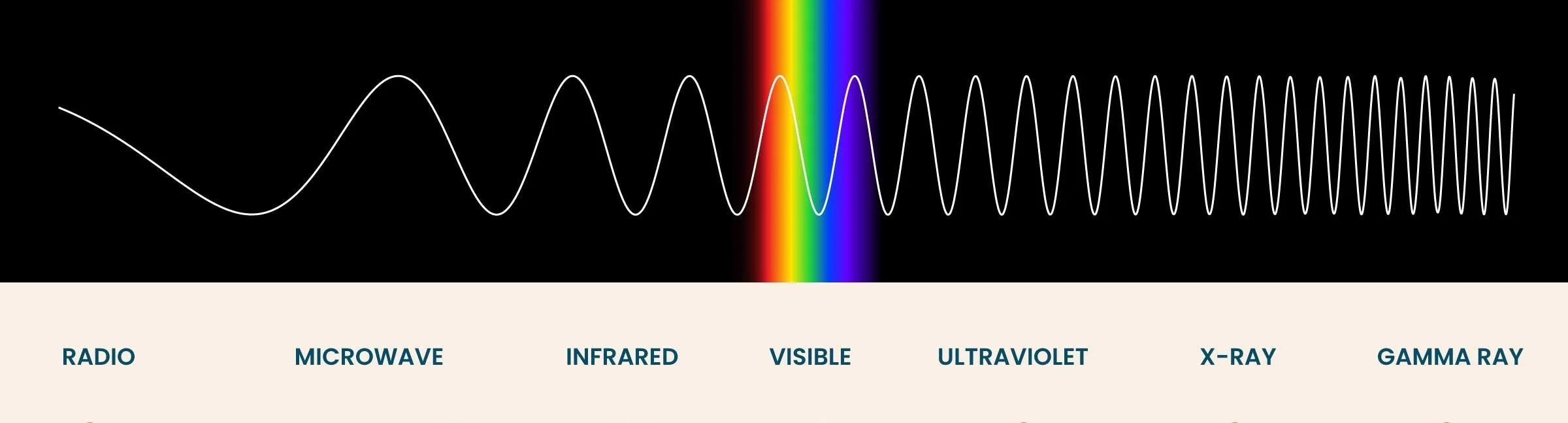
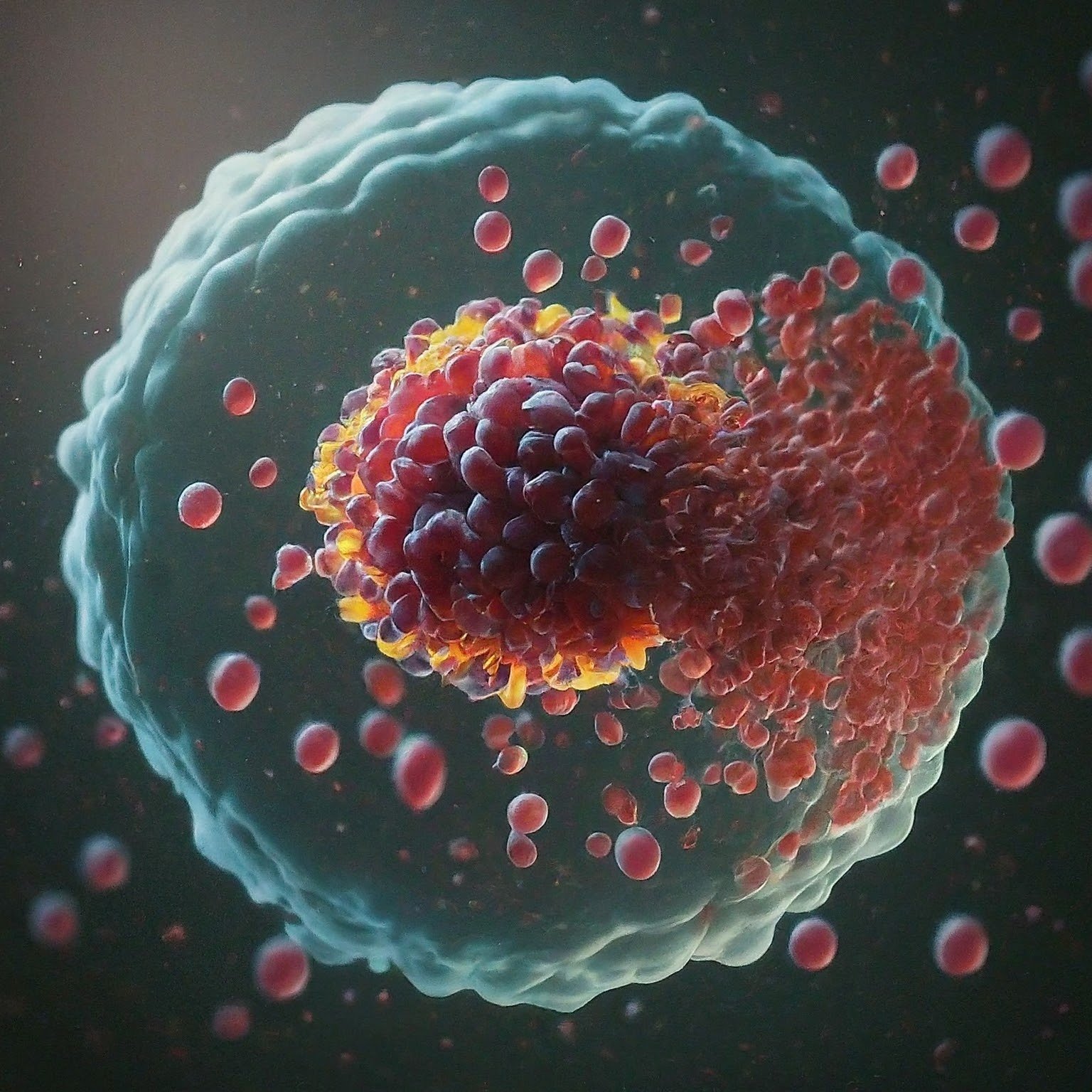
When people hear the term radiation, they tend to think of nuclear radiation. This band of energy to the right of the visible spectrum on the graph below. It is often referred to as ionizing radiation, because it is higher energy and is powerful enough to dislodge tightly bound electrons from atoms in our cells, creating ions. These ions cause chemical reactions in our cells that can lead to direct DNA damage, and indirect damage via free radical production. It has long been known that ionizing radiation can cause cancer, and this is how. What about the lower energy radiation to the left?
Non-Ionizing Radiation
Non-ionizing radiation includes the electromagnetic fields emitted by devices like cell phones and Wi-Fi routers, Bluetooth headphones, radio waves, Radar, microwave ovens, and A/C fields from wires in our homes. These fields are weaker and don't have enough energy to directly damage DNA, and though higher levels of exposure can cause tissue heating—and eventually burning—exposure to lower levels has long been considered harmless by our health institutions. This viewpoint has been so dominant over the years that it has been hard for scientists to get funding to research the issue, but there have been some important discoveries, nonetheless, and we now have a solid evidence that non-ionizing radiation can harm our health. In 2018, the Nation Toxicology Program (NTP), a division of the National Institute of Health concluded a lifetime study of the effects of exposure to 2G and 3G cell phone radiation on rats and mice. The study was proposed by the NTP as a means to shutdown speculation by the public that cell phones cause cancer, and despite methodology that appeared to have been designed to stress the control subjects—in order to induce illness, and skew the results—the results showed:
- A statistically significant increase in tumors of the heart, brain and adrenal gland in male rats
- A noteworthy increase in tumors for the pancreas, prostate, pituitary, liver and lung
- Heart disease and prenatal effects, including lower bodyweight
- DNA damage
In the study, they controlled for any thermal effects by insuring that the rats body temperature never rose by more than 1 degree. It is worth noting, that since this study was completed, mobile phone usage has increased rapidly, and we are using radio frequencies with much higher energy than used in the study. The NTP had planned a follow up to the 2018 study, but the research was abruptly cancelled in early 2024 with little fanfare, and no more research is scheduled or being planned.
In the Light page we discussed how blue light toxicity comes about by the freeing of vitamin A from the photoreceptors in the eyes and the skin by weakening the bonds between them. It turns out that electromagnetic waves, particularly in the microwave spectrum, can free vitamin A as well by enacting a rotational force on the chemical bond. This is alarming, because while humans have a particularly unstable bond, nocturnal mammals have an especially strong bond, meaning: any damage observed in rats and mice is going to be stronger in humans.
5G and Beyond…
The rollout of 5G wireless technology introduces several novel features not used in earlier generations, fundamentally changing the nature of radio waves. These advancements enable high-bandwidth activities, to be used by many users simultaneously, but drastically increase our exposure to harmful radiation.
These novel features include…
Focused Waves
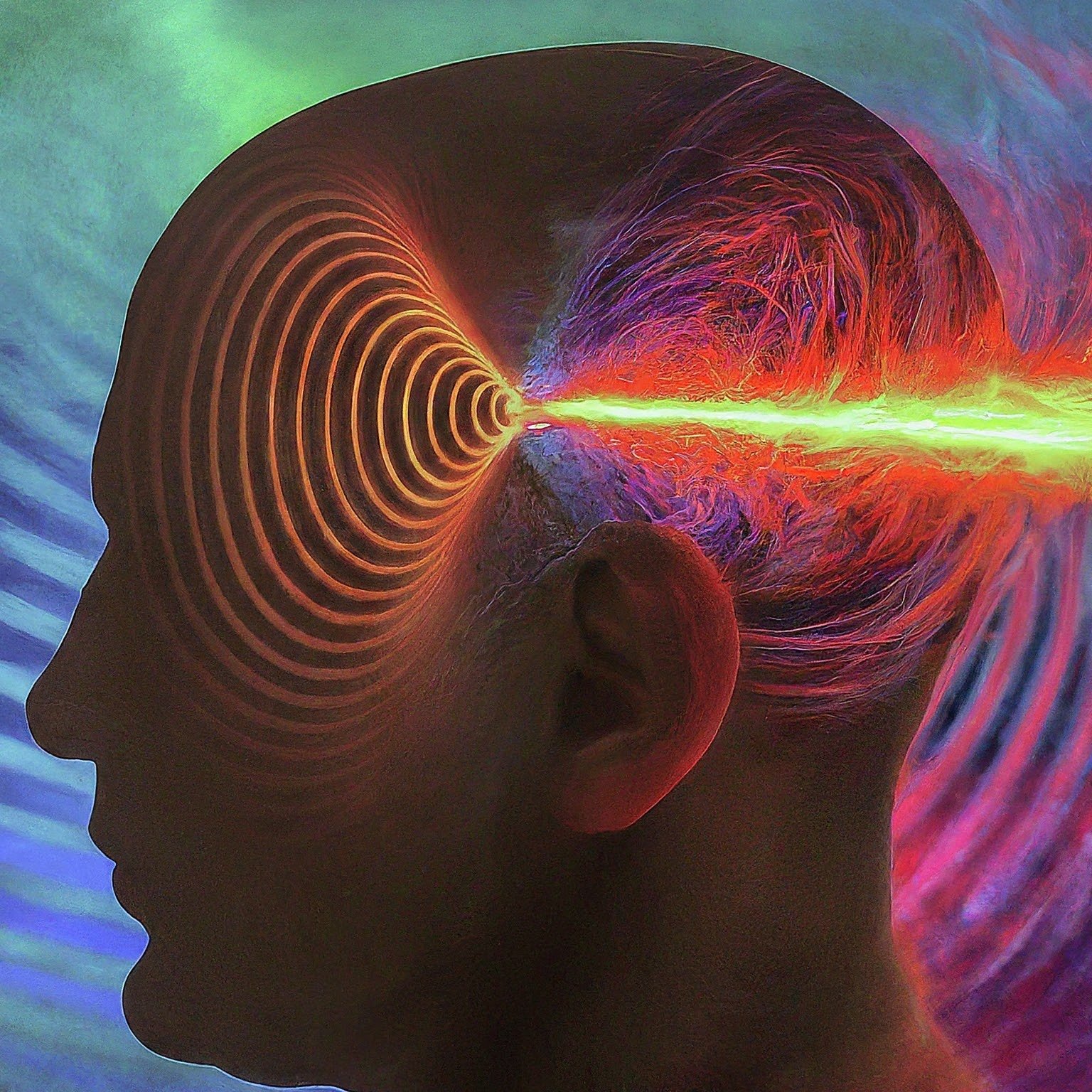
Beamforming is a critical feature of 5G designed to enhance signal efficiency. Unlike traditional antennas that radiate signals in all directions, beamforming allows antennas to focus signals directly toward a specific user or device. This targeted approach improves signal strength and quality but also increases exposure to radiation for users in the beam's path.
Massive MIMO
Massive multiple-input and multiple-output (MIMO) is another key technology in 5G that enhances network capacity. It involves using a large number of antennas at the base station to transmit and receive multiple data streams simultaneously, allowing many users to be served at the same time. This increases the overall throughput of the network, but also means higher exposure levels as signals converge in certain areas.
Antenna Proliferation
5G networks require more antennas placed closer to users compared to previous generations. This is because 5G operates at higher frequency bands, such as millimeter waves, which have shorter wavelengths and can carry more data but have a limited range and are easily obstructed by buildings and other obstacles. To overcome these challenges, 5G networks utilize a higher density of small cells—miniature base stations—often hidden on streetlights, buildings, and other structures to provide continuous coverage.
Signal Strength
5G technology employs signals that can be up to 100 times stronger than those used in 3G networks. This strength is necessary to support high-speed data transfer and connectivity for numerous devices simultaneously. However, this increased power can also mean higher exposure levels for users and those nearby.
What Does This Mean for Your Health?
If there is any good news, it is that if you don't have a 5G device in your home or hand, the radiation from a base station, including those from satellites, is minimal. However, the proliferation of small cells closer to living areas means constant low-level exposure. When using a 5G device, the power density of radiation directed at you from the base station will be much stronger and more focused due to beamforming, resulting in more intense exposure levels.
Unfortunately, while you can control your own usage, you cannot control others' usage, meaning the habits of people around you are as important as your own. What's more, 5G was introduced with the idea of putting antennas in everything from dishwashers, to toasters, light bulbs, and so on to create and "Internet of Things", that will be constantly connected. In remote areas where the infrastructure doesn't exist to expand closely placed base stations, 5G will be delivered via satellites at the upper reaches of our atmosphere.
5G will be unavoidable, and 6G which builds upon 5G with even more powerful signals is on the horizon, so our best bet is to create a sanctuary in our own living spaces, and optimize our mitochondrial capacity to ward off this new environmental toxin.